
After stopping Ozempic or another GLP-1: how to eat to keep the weight off
When a GLP-1 medication such as semaglutide (Ozempic, Wegovy) or tirzepatide (Mounjaro, Zepbound) is stopped, appetite usually comes back and much of the lost weight tends to return — unless habits are in place to hold it. In the STEP 1 trial, people who stopped semaglutide regained about two-thirds of their weight loss within a year. Eating and activity habits can’t fully replace the medication, but they decide how much of the result you keep. This guide covers what the research shows and what to do about it. If you are still on the medication, start with what to eat on Ozempic and other GLP-1s.
Stopping is a decision to make with your doctor
Whether to stop, when, and how is your prescriber’s call — there is no tapering schedule in the nutrition guidance, and this article doesn’t offer one. If you take a GLP-1 for type 2 diabetes, stopping can change your blood sugar, so never stop on your own. Tell your doctor promptly if, after stopping, you notice strong thirst, frequent urination or blurred vision, or if eating starts to feel out of control.
What happens to weight after stopping: the research
Two large trials looked at exactly this question:
- STEP 1 extension (semaglutide). People lost an average of 17.3% of their body weight over 68 weeks. One year after the medication and the study’s lifestyle program ended, they had regained two-thirds of that loss, ending about 5.6% below their starting weight. Improvements in blood pressure and other markers also moved back toward where they started.
- SURMOUNT-4 (tirzepatide). After 36 weeks on the medication (about 21% weight loss), people were randomly switched to a placebo or kept on treatment. Over the next year, those who stopped regained 14% of their weight, while those who continued lost another 5.5%.
The researchers’ conclusion is that obesity behaves like a long-term condition: for many people, the medication works while it is taken. That’s not a personal failure — and it is why the 2025 advisory from four US medical societies calls weight maintenance one of the top goals of GLP-1 care, and recommends building eating and activity habits before and during treatment rather than after.
Why appetite comes back
GLP-1 medications reduce appetite and slow how fast your stomach empties. When the medication stops, those effects fade over the following weeks, and hunger, portion sizes and food thoughts often return to how they were before. Your body has also adapted to a lower weight. Expecting this — rather than being caught off guard by it — is half of the plan.
📱 Want this on your phone? The free K Lab app gives you an assessment, a meal plan and a symptom tracker.
Download the app →What to eat to keep the weight off
There is no special “post-Ozempic diet”. What works is the same plate you built during treatment, scaled up slightly as appetite returns:
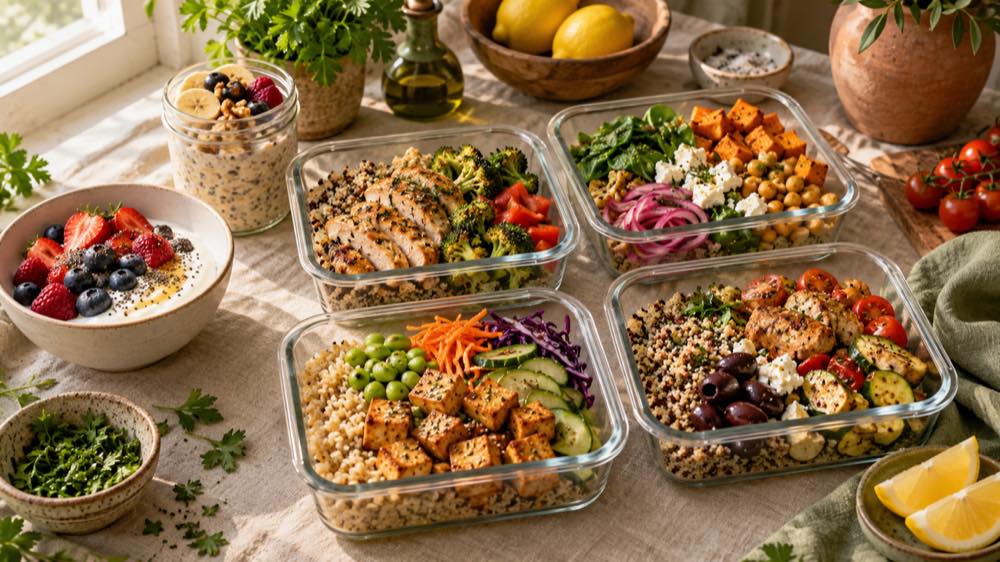
- Protein at every meal. It keeps you full for longer, and it protects the muscle you worked to keep: eggs, Greek yogurt, cottage cheese, fish, chicken, tofu, beans and lentils.
- Half the plate vegetables. Volume and fiber for few calories — the easiest way to eat a satisfying portion as appetite returns.
- Fiber from whole foods. Legumes, whole grains, vegetables and fruit; aim to build up toward 25–30 g a day.
- Regular meals at set times. Long gaps make returning hunger harder to manage. Three meals and a planned snack beat grazing or skipping.
- Water and unsweetened drinks. Sugary drinks and juice add calories without fullness.
If you want a simple way to build each meal, the balanced plate method covers it, and how much protein you need explains the numbers.
A sample day after a GLP-1
A normal-sized day built on the same principles — an example, not a prescription:
- Breakfast: two eggs with whole-grain toast and tomato, or Greek yogurt with oats and berries.
- Lunch: a bowl of lentil or bean soup with a side salad and a piece of chicken or fish.
- Snack (planned): cottage cheese with fruit, or a handful of nuts with an apple.
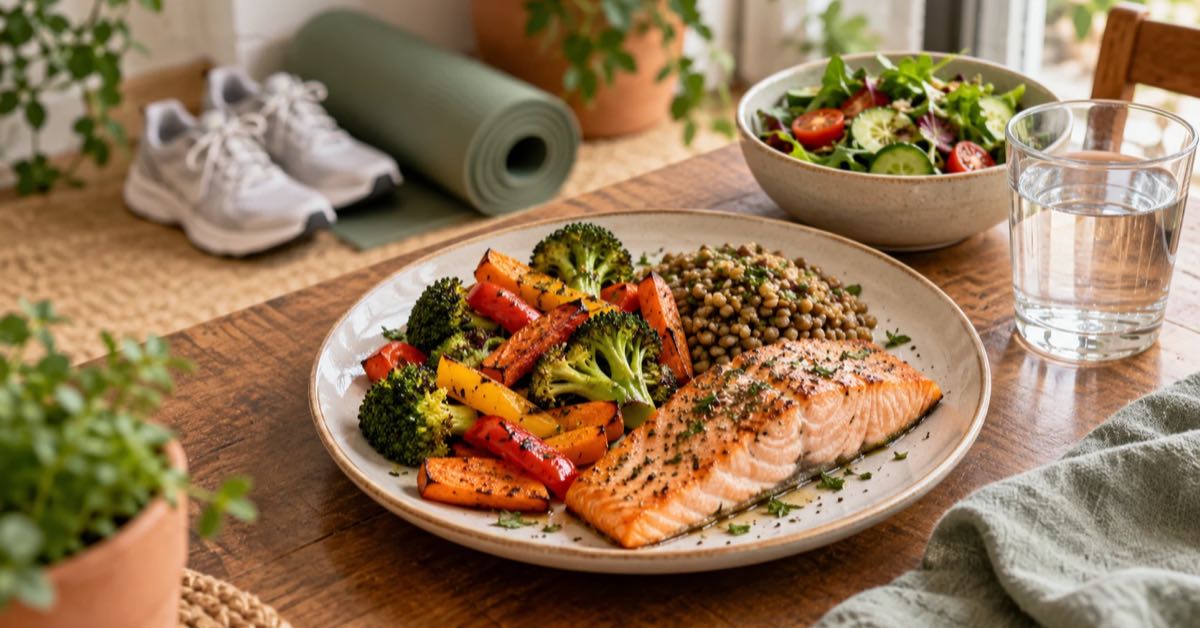
- Dinner: baked salmon, a large portion of roasted vegetables and a small serving of brown rice or potatoes.
- Treat: a portion-controlled dessert you enjoy, a couple of times a week — planned, not forbidden.
Habits that help people keep weight off
The advisory points to what people who maintain weight loss long-term tend to have in common, drawn from the US National Weight Control Registry:
- Regular physical activity — many in the registry are active for about an hour a day. For muscle, the advisory recommends strength training at least 3 times a week plus at least 150 minutes of moderate aerobic activity.
- Self-monitoring — weighing yourself regularly and keeping an eye on what you eat and how much you move, so a small drift is noticed early.
- Flexibility, not severe restriction — occasional portion-controlled treats instead of strict rules that collapse.
- Coping skills — social support, planning ahead and problem solving for the situations that usually derail you.
Sleep, stress and mood matter too: the advisory lists them alongside nutrition as part of care.
Set a regain plan in advance
Agree with yourself, and ideally with your doctor, on a number: for example, if your weekly weight rises 2–3 kg (about 5 lb) above where you stopped, you return to the basics — protein-first meals, no long gaps, more vegetables — and book a check-in. A plan made in a calm moment works far better than willpower in a hungry one. And restarting medication is a legitimate option to discuss; it isn’t “giving up”.
If you notice binge eating, a sense of losing control around food, or low mood, talk to your doctor or a mental health professional — those deserve support of their own.
Evidence-based PDF guides — anti-age, gut health, detox and more. Get them free, straight to your inbox.
Browse the guides →Frequently asked questions
Will I gain weight after stopping Ozempic?
Many people do. In the STEP 1 trial extension, people regained about two-thirds of their weight loss within a year of stopping semaglutide, though on average they stayed about 5.6% below their starting weight. Habits built during treatment help you keep more of the result.
How do I stop Ozempic without gaining weight back?
How and when to stop is a decision for your doctor. On your side: keep protein at every meal, fill half the plate with vegetables, eat at regular times, stay active with strength training at least 3 times a week, and weigh yourself regularly so you notice changes early.
What should I eat after stopping a GLP-1?
The same foundations as during treatment, in slightly larger portions: protein at every meal, plenty of vegetables, fiber from legumes and whole grains, regular meal times and mostly unsweetened drinks. Strict diets tend to backfire; planned, portion-controlled treats work better.
Why am I so hungry after stopping Ozempic?
GLP-1 medications reduce appetite and slow stomach emptying; when you stop, those effects fade and hunger usually returns toward where it was before. Regular protein- and fiber-rich meals help, and if hunger feels out of control, talk to your doctor.
Can I restart a GLP-1 if the weight comes back?
That is a medical decision to discuss with your doctor. Research suggests that for many people obesity is a long-term condition and the medication works while it's taken, so restarting or continuing treatment can be a reasonable option rather than a failure.
Sources
Keep the habits going with K Lab
Log your weight and see the trend, snap a photo of a meal to check its protein, and get a meal plan built around protein, vegetables and fiber. It’s nutrition support alongside your doctor, not medical advice.
Get K Lab on your phone
A free assessment, a 3-day meal plan, symptom and habit tracking — in English, Spanish and Russian.
Free to download — no card needed to start.
This article is educational and not medical advice. GLP-1 medications are prescription drugs; decisions about starting, stopping or restarting them belong with your doctor. Using K Lab does not create a doctor–patient relationship. Full medical disclaimer.