
Eating before bed: how it affects your sleep
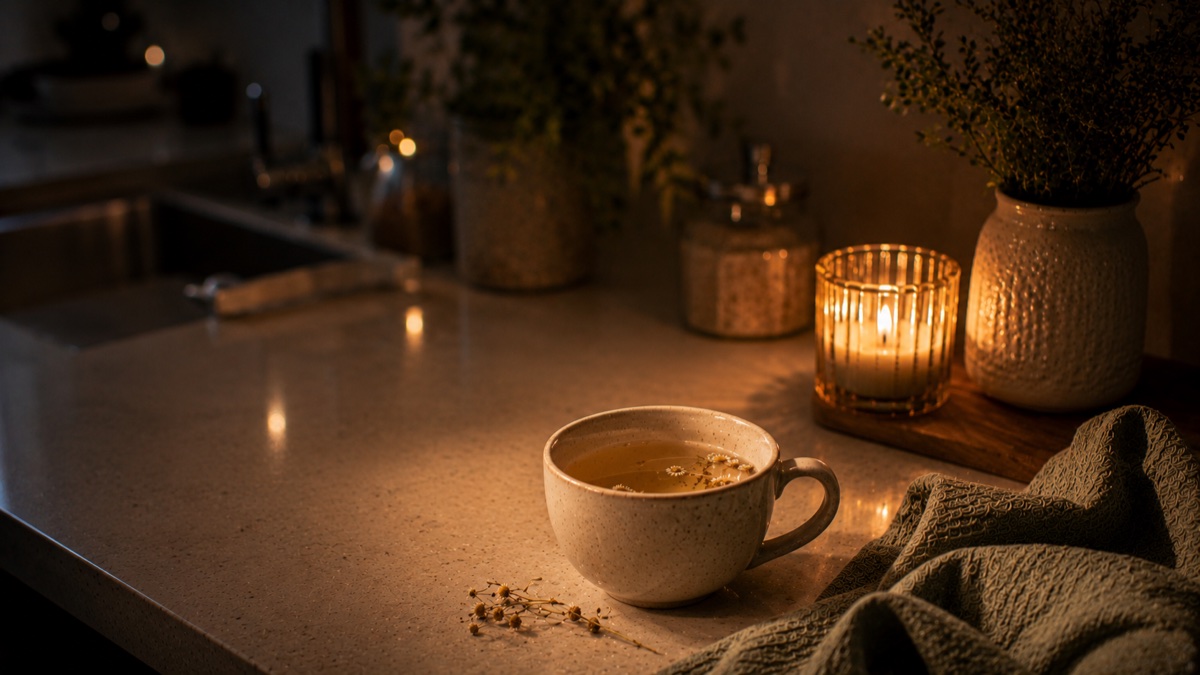
You eat well all day, then have a late dinner or a sweet snack on the couch before bed. It feels harmless — but night-time eating quietly works against your sleep, your recovery and, over weeks, your waistline. Here's why, and what to do instead.
At night your body repairs — it shouldn't be digesting
Sleep is repair time: hormones reset, the nervous system calms, and skin and cells renew. Go to bed on a full stomach and your body has to spend that window digesting instead of recovering. Sleep turns shallow, and you wake up heavy, puffy and not quite rested.
Sugar is handled worse in the evening
As night approaches, insulin sensitivity drops and the sleep hormone melatonin further blunts how you process carbohydrates. So a sweet or starchy late dinner spikes your blood sugar and then lets it crash — which is behind those 3 a.m. wake-ups, the morning cravings, and gradual weight gain over time.
📱 Want this on your phone? The free K Lab app gives you an assessment, a meal plan and a symptom tracker.
Download the app →Heaviness, reflux and restless sleep
Lying down with a full stomach makes it easier for acid to travel back up — hello, heartburn and that uncomfortable, can't-settle feeling. Fatty, oversized meals digest slowly and keep your body "switched on" exactly when it's trying to wind down.
How to eat for better sleep
Aim to finish eating 2–3 hours before bed, calmly and not to fullness: protein, vegetables and a little slow carb. If you're genuinely hungry close to bedtime, keep it light and savoury — kefir, a little cottage cheese, or some vegetables — and skip sugar and heavy fat. A lighter, earlier dinner is one of the simplest ways to wake up clearer and steadier.
Evidence-based PDF guides — anti-age, gut health, detox and more. Get them free, straight to your inbox.
Browse the guides →Better evenings, better mornings
The free K Lab assessment turns your symptoms and habits into a personalized 30-day plan — with light dinner recipes, a tracker that includes a sleep diary, and an AI coach. Small evening changes, real daytime difference.
Get K Lab on your phone
A free assessment, a 7-day meal plan, symptom and habit tracking — in English, Spanish and Russian.
Free to download — no card needed to start.
This article is educational and not medical advice. Frequent reflux, night waking or trouble sleeping can have treatable causes — please talk to your doctor. Using K Lab does not create a doctor–patient relationship. Full medical disclaimer.