
Food combining myth: does separating foods help weight loss?
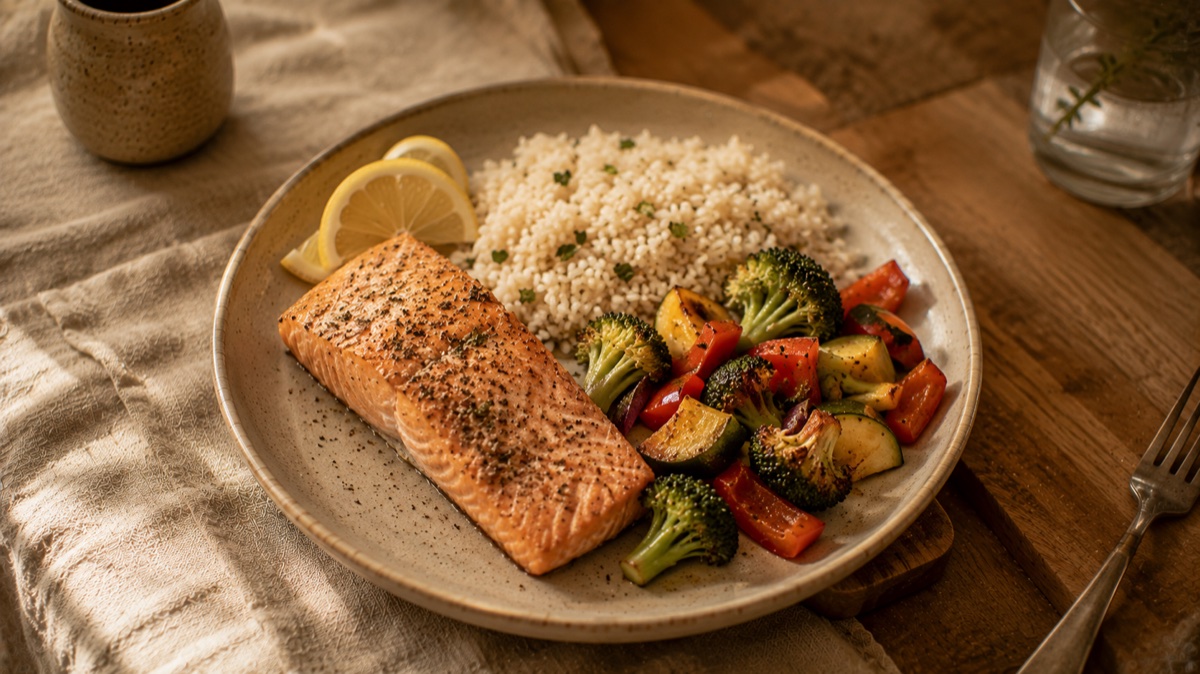
“Never mix protein and carbs.” “Eat fruit alone.” Food-combining rules sound scientific, but when researchers tested them, they didn’t hold up.
What the research shows
In a controlled trial, people eating a combined diet and people following strict food-combining rules lost the same amount of weight — because both groups ate the same calories. Separating foods added nothing. Your digestive system is fully capable of handling protein, carbs and fat in the same meal; that’s how humans have always eaten.
What actually helps weight
- Total calories and consistency — the real driver over time;
- Protein at each meal for fullness and muscle;
- Fiber from vegetables, legumes and whole grains;
- meals you enjoy enough to keep eating.
A simpler rule
Instead of complicated combining charts, build a balanced plate: half vegetables, a palm of protein, a fist of slow carbs, a little healthy fat. It’s easier, it’s satisfying, and it’s what the evidence supports.
Where the rule came from
Food combining was popularised in the 1920s by William Hay, who believed that mixing “acid” and “alkaline” foods left undigested matter in the gut. The idea predates almost everything we now know about digestive physiology. It survived because the charts look systematic and because any structured eating plan tends to cut calories by accident — people who follow combining rules simply eat fewer, simpler meals.
📱 Want this on your phone? The free K Lab app gives you an assessment, a meal plan and a symptom tracker.
Download the app →Why your gut handles mixed meals fine
Digestion is not a single process that can be jammed. The stomach releases acid and pepsin for protein while amylase from saliva keeps working on starch; the pancreas then delivers enzymes for protein, starch and fat into the small intestine at the same time. Almost every whole food is itself a mixture — beans, milk, oats and nuts all contain protein, carbohydrate and fat together. A gut that could not process a mixed meal could not process a chickpea.
What the trial actually measured
In the controlled study most often cited, participants on a balanced diet and participants following strict combining rules ate the same number of calories for six weeks. Both groups lost weight. The difference between them was not statistically meaningful, and markers such as cholesterol and blood glucose moved in parallel. The conclusion was narrow but clear: when calories match, separating foods adds nothing.
Where the idea does contain something useful
Two habits that often travel with food-combining advice are worth keeping on their own merits. Eating fruit on its own between meals is a reasonable snack pattern, and it tends to displace biscuits. Keeping meals simpler — fewer components, less restaurant-style richness — usually means less added fat and sugar. Neither effect has anything to do with enzymes; both come from what ends up on the plate.
When digestion problems are worth investigating
If mixed meals reliably leave you bloated, uncomfortable or in pain, that is a signal about your gut rather than proof that combining rules work. Persistent bloating, reflux, diarrhoea or unexplained weight loss are worth discussing with a doctor: lactose intolerance, coeliac disease, low stomach acid and irritable bowel syndrome all produce symptoms that combining charts pretend to explain but cannot fix.
Evidence-based PDF guides — anti-age, gut health, detox and more. Get them free, straight to your inbox.
Browse the guides →Frequently asked questions
Is it bad to eat protein and carbs together?
No. Your body digests mixed meals easily, and studies show combining them doesn’t affect weight loss when calories are equal.
Does food combining speed up metabolism?
No. There’s no evidence food-combining rules boost metabolism or fat loss beyond the calories you eat.
What actually helps weight loss?
A modest calorie deficit you can stick to, enough protein and fiber, and meals you enjoy — not the order or pairing of foods.
Should I eat fruit on an empty stomach?
You can, and many people find fruit a convenient snack between meals — but it is a preference, not a physiological requirement. Fruit eaten with a meal is digested perfectly well.
Why do I feel heavy after mixed meals?
Usually portion size, fat content or eating speed rather than the combination itself. If heaviness is regular and severe, it is worth checking with a doctor rather than rearranging your plate.
Skip the rules, keep the results
The free K Lab assessment builds balanced, protein- and fiber-rich meals around your tastes — no confusing combining rules, just food that works.
Get K Lab on your phone
A free assessment, a 7-day meal plan, symptom and habit tracking — in English, Spanish and Russian.
Free to download — no card needed to start.
This article is educational and not medical advice. Using K Lab does not create a doctor–patient relationship. Full medical disclaimer.