
What to eat for steady energy (no afternoon crash)
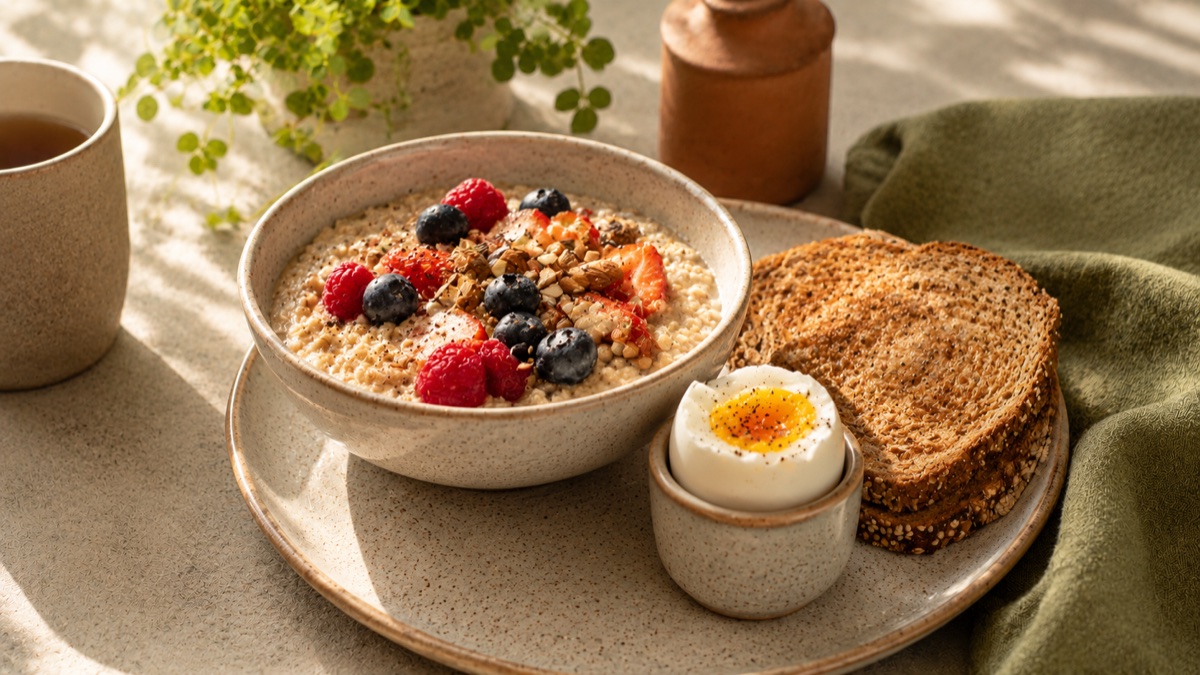
That 3 p.m. wall — foggy, sleepy, reaching for coffee or a cookie — usually isn’t about lack of sleep alone. It’s often the shape of your last meal. Build meals differently and the crash mostly disappears.
Why the crash happens
A meal heavy on quick carbs (white bread, pastries, sugary drinks) spikes your blood sugar, then drops it below where it started. That dip is the slump — low energy, cravings and poor focus.
Build meals for steady energy
- Protein at every meal (eggs, yogurt, fish, chicken, legumes);
- Fiber from vegetables, fruit and whole grains;
- Slow carbs (oats, buckwheat, brown rice) instead of refined ones;
- a little healthy fat for staying power.
This mix releases energy gradually instead of in a spike-and-crash.
📱 Want this on your phone? The free K Lab app gives you an assessment, a meal plan and a symptom tracker.
Download the app →Small habits that help
Eat a real protein breakfast, don’t skip lunch, stay hydrated (thirst masquerades as tiredness), and take a short walk after eating. Use caffeine early, not as an all-day patch for crashes.
Evidence-based PDF guides — anti-age, gut health, detox and more. Get them free, straight to your inbox.
Browse the guides →Frequently asked questions
Why do I crash in the afternoon?
Most often because lunch was heavy on quick carbs, which spikes then drops your blood sugar. A balanced lunch with protein, fiber and slow carbs prevents the dip.
What foods give lasting energy?
Meals combining protein, fiber and slow carbs — like eggs with oats, or fish with vegetables and buckwheat — release energy gradually and avoid crashes.
Does coffee fix low energy?
Only briefly, and using it all day can worsen sleep and next-day energy. Use caffeine early and rely on balanced meals for steady energy.
Meals built for all-day energy
The free K Lab assessment plans balanced meals — protein, fiber and slow carbs — matched to your day, so the afternoon crash stops being a habit.
Get K Lab on your phone
A free assessment, a 7-day meal plan, symptom and habit tracking — in English, Spanish and Russian.
Free to download — no card needed to start.
This article is educational and not medical advice. Persistent fatigue despite good habits deserves a check with your doctor. Using K Lab does not create a doctor–patient relationship. Full medical disclaimer.