
Low iron and fatigue: why iron deficiency makes you tired
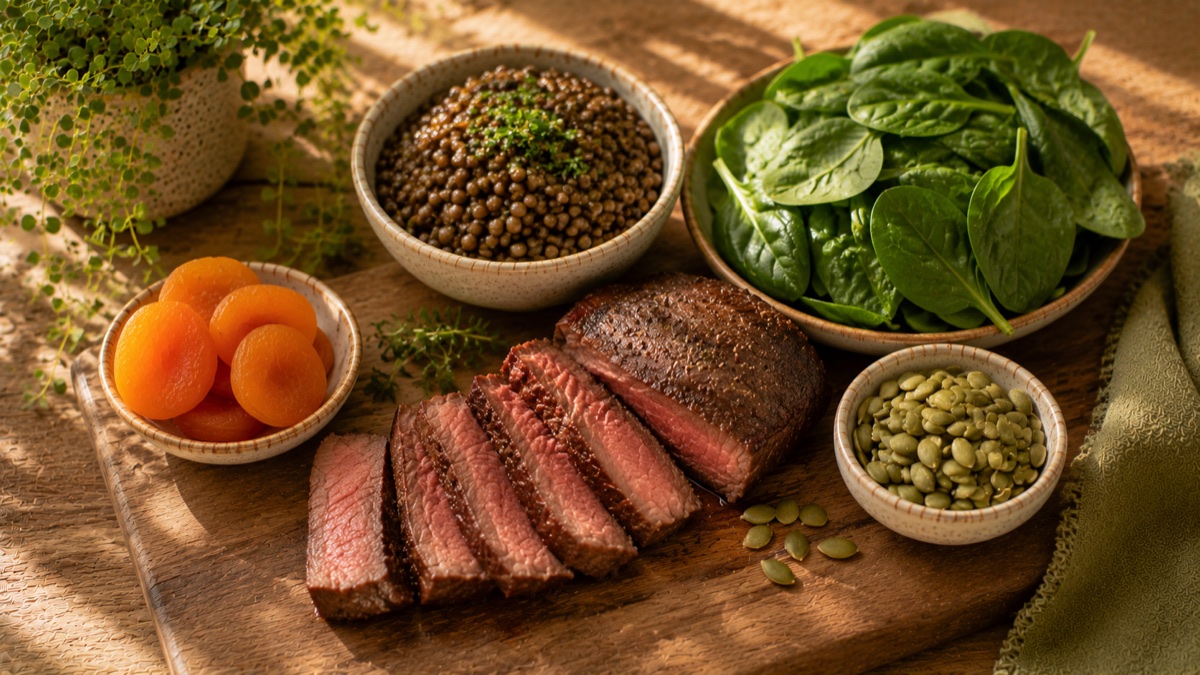
If you feel drained no matter how much you sleep, low iron is one of the most common and most missed reasons — especially in women. Iron deficiency is very common: studies estimate that around 38% of women of reproductive age are low in iron even without full-blown anemia. The good news: it is measurable and fixable.
Signs of low iron (before anemia)
Iron can run low long before a standard “anemia” diagnosis. Watch for:
- persistent fatigue and low stamina, even after rest;
- restless, achy legs at night;
- unusual cravings for ice or non-food items (pica);
- hair shedding, brittle nails, pale skin;
- breathlessness or a racing heart on light effort;
- trouble concentrating (“brain fog”).
The two tests worth asking your doctor for
Iron status is best seen with ferritin (your iron stores) and transferrin saturation. As a rough guide, ferritin under ~30 ng/mL points to low stores, and transferrin saturation under ~20% supports it. One caveat: ferritin also rises with any inflammation or infection, so it can read falsely normal when you’re unwell — which is why a doctor interprets it alongside your symptoms.
📱 Want this on your phone? The free K Lab app gives you an assessment, a meal plan and a symptom tracker.
Download the app →Foods that raise iron
Two kinds of iron matter: heme (from animals, absorbed well) and non-heme (from plants). Build meals around:
- lean red meat, liver, turkey; fish and shellfish;
- lentils, chickpeas, beans, tofu;
- buckwheat, pumpkin seeds, spinach and other greens.
Two simple tricks: pair plant iron with vitamin C (peppers, citrus, berries) to boost absorption, and keep tea and coffee away from iron-rich meals, since they block it.
What honestly helps
Raising iron reliably lifts subjective tiredness for people who are actually low — so testing first matters, because more iron does nothing if your levels are already fine (and too much can harm). If your symptoms fit, ask your doctor to check ferritin, then let food do steady work day to day.
Why a "normal" iron result can still be low
This is the part that trips people up. A full blood count can look entirely normal while iron stores are depleted, because anaemia is the last stage, not the first. Ferritin — the storage measure — falls first, and symptoms can appear well before haemoglobin moves at all. That's why asking specifically for ferritin matters.
Two complications are worth knowing before you read your own result. First, laboratory reference ranges for ferritin often start as low as 10–15 ng/mL, but many clinicians treat levels under 30 ng/mL as iron deficiency because that's where symptoms cluster. A result flagged "normal" by the lab may still be worth discussing. Second, ferritin is an acute-phase reactant: infection, inflammation or obesity can push it up and mask a genuine deficiency. If inflammation is suspected, transferrin saturation alongside CRP gives a clearer picture than ferritin alone.
What the evidence says iron does and doesn't fix
In iron-deficient people without anaemia, treatment reduces subjective fatigue — that effect is reasonably well supported. What it does not reliably do is improve objective physical performance in that same group, and in people who are not deficient it does nothing for energy at all. Iron is not a general-purpose pick-me-up.
Deficiency is common enough to take seriously: it affects a substantial share of women of reproductive age, and heavy menstrual periods are the most frequent cause. Pregnancy, frequent blood donation, coeliac disease, a vegetarian or vegan diet and long-term acid-suppressing medication all raise the risk.
Getting more from the iron in your food
Iron comes in two forms that behave differently. Heme iron, from meat, poultry and fish, is absorbed readily. Non-heme iron, from beans, lentils, tofu, dark leafy greens and fortified grains, is absorbed far less efficiently — but its absorption is the part you can influence:
- Vitamin C at the same meal markedly improves non-heme absorption. Peppers, citrus, tomatoes and strawberries alongside a lentil dish do real work.
- Tea and coffee contain polyphenols that inhibit it. Moving them an hour away from iron-rich meals costs nothing.
- Calcium competes with iron, so a large dairy serving is better placed at a different meal.
- Soaking or sprouting legumes and grains reduces phytates, which also bind iron.
One caution: don't start iron supplements on your own. Excess iron accumulates and is genuinely harmful, some people carry haemochromatosis without knowing, and supplements can mask the cause of a deficiency that needs investigating. Testing first, then a doctor's guidance, is the right order.
When to see a doctor
Ask sooner rather than later if you have heavy periods, blood in the stool or black stools, unexplained weight loss, shortness of breath on mild exertion, or restless legs alongside fatigue. These change what needs investigating — the priority becomes finding the source of the loss, not just topping up the iron.
Evidence-based PDF guides — anti-age, gut health, detox and more. Get them free, straight to your inbox.
Browse the guides →Frequently asked questions
Can I be low in iron without being anemic?
Yes. Iron stores (ferritin) can fall and cause fatigue long before hemoglobin drops enough to be called anemia. That is why ferritin is such a useful early test.
What ferritin level is considered low?
As a general guide, ferritin under about 30 ng/mL suggests low iron stores, but ferritin rises with inflammation, so your doctor interprets it together with your symptoms and other tests.
Should I just take an iron supplement?
Not without testing. Iron helps fatigue only if you are genuinely low, and excess iron can be harmful. Check your levels with a doctor first, and prioritize iron-rich food day to day.
See what your symptoms point to
The free K Lab assessment turns your symptoms into a personalized plan — including which lab tests are worth discussing with your doctor and iron-rich meals built around your tastes.
Get K Lab on your phone
A free assessment, a 7-day meal plan, symptom and habit tracking — in English, Spanish and Russian.
Free to download — no card needed to start.
This article is educational and not medical advice. Fatigue has many causes; ask your doctor before testing or supplementing. Using K Lab does not create a doctor–patient relationship. Full medical disclaimer.