
Anti-inflammatory foods: what the evidence really says
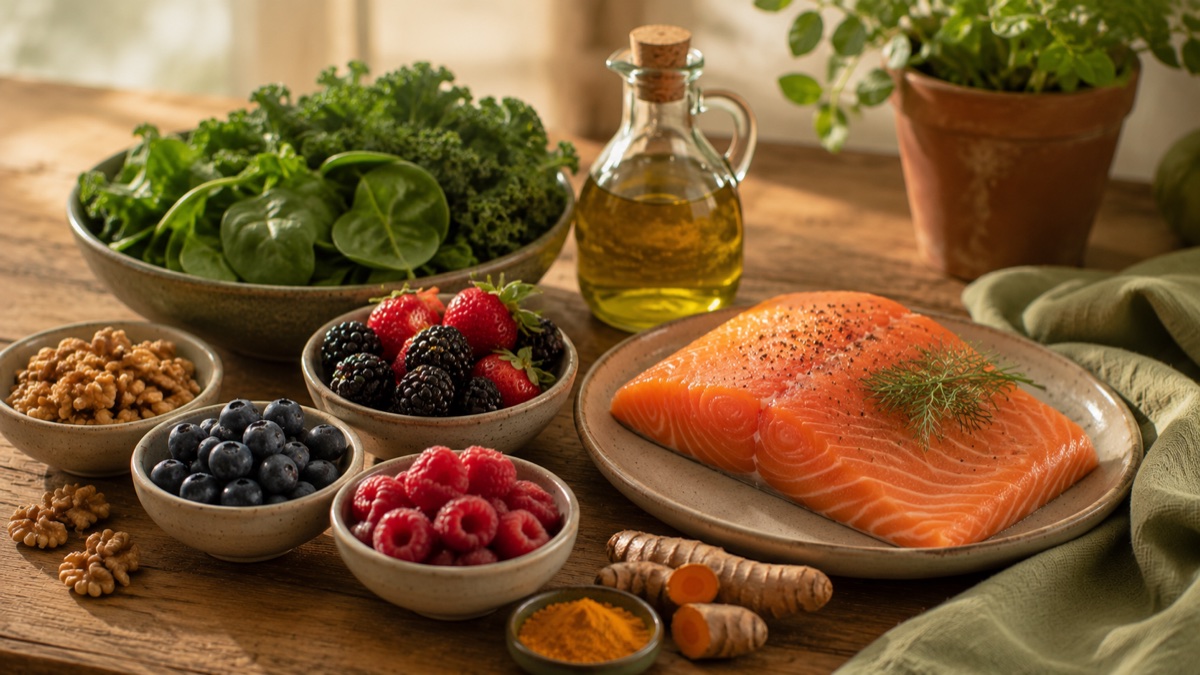
"Anti-inflammatory eating" gets used to sell everything from turmeric lattes to expensive supplements, so it helps to be clear about what it actually means. It is not about acute inflammation — the useful, short-term response that heals a cut or fights an infection. It targets chronic low-grade inflammation: a quiet, ongoing state linked to heart disease, type 2 diabetes and other long-term conditions. The honest headline is that no single food switches it off. What moves the needle is an overall pattern of eating.
What anti-inflammatory eating really means
Chronic low-grade inflammation is different from the swelling you see around an injury. It is largely invisible and can persist for years, shaped by diet, body weight, sleep, stress and activity. Diet is one lever among several — a genuine one, but not a magic switch. The eating pattern with the strongest research behind it is a Mediterranean-style one: plenty of plants, healthy fats, fish, and minimally processed food. In studies it is consistently linked with lower markers of inflammation, but the effect comes from the whole pattern, not any one hero ingredient.
Foods with the best evidence
These are the everyday foods most consistently associated with lower inflammation:
- Oily fish (salmon, sardines, mackerel) for omega-3 fats;
- Colourful vegetables and berries — leafy greens, peppers, tomatoes, blueberries — rich in polyphenols;
- Extra-virgin olive oil, a core fat of the Mediterranean pattern;
- Nuts (walnuts, almonds) and legumes (lentils, chickpeas, beans);
- Whole grains such as oats, barley and buckwheat.
Much of this works through fibre feeding your gut bacteria, so building up your fibre intake is one of the most practical steps you can take.
📱 Want this on your phone? The free K Lab app gives you an assessment, a meal plan and a symptom tracker.
Download the app →What to limit
Just as important as what you add is easing off the foods tied to higher inflammation:
- Ultra-processed foods — packaged snacks, processed meats, deep-fried dishes and ready meals high in refined starch, industrial trans fats and additives;
- Excess added sugar and sugary drinks, which drive blood-sugar spikes;
- Too much alcohol, which is linked with higher inflammatory markers.
Notice the word excess. The goal is not a fearful, all-or-nothing diet but shifting the balance so whole foods make up most of your plate.
The honest bottom line
There is no single "anti-inflammatory superfood," and any product marketed that way deserves a raised eyebrow. What the evidence supports is calm and unglamorous: a mostly-plants, Mediterranean-style pattern kept as varied as you can make it, more fish and olive oil, less ultra-processed food and added sugar, kept up consistently. Add regular movement, decent sleep and a healthy weight, and you are working with your body rather than chasing a miracle ingredient.
Evidence-based PDF guides — anti-age, gut health, detox and more. Get them free, straight to your inbox.
Browse the guides →Frequently asked questions
Is there one best anti-inflammatory food?
No. Despite the marketing, no single food lowers chronic inflammation on its own. The benefit comes from an overall pattern — a Mediterranean-style diet rich in vegetables, fish, olive oil, nuts and whole grains — kept up over time.
Do I need turmeric or supplements for inflammation?
Not necessarily. Whole foods like oily fish, colourful vegetables, olive oil and legumes have stronger everyday evidence than most supplements. If you are considering a supplement, discuss it with your doctor rather than relying on marketing claims.
Which foods should I cut down on?
Ease off ultra-processed foods, excess added sugar and sugary drinks, and too much alcohol, since these are linked with higher inflammatory markers. The aim is balance — whole foods most of the time — not a strict, all-or-nothing diet.
Build a pattern, not a diet
The free K Lab assessment turns these principles into a personalized 30-day plan — Mediterranean-style meals built around your tastes, so anti-inflammatory eating becomes a habit rather than a rulebook.
Get K Lab on your phone
A free assessment, a 7-day meal plan, symptom and habit tracking — in English, Spanish and Russian.
Free to download — no card needed to start.
This article is educational and not medical advice. If you have a health condition or take medication, ask your doctor before making major dietary changes. Using K Lab does not create a doctor–patient relationship. Full medical disclaimer.