
How to get 30 grams of fiber a day (and why it matters)
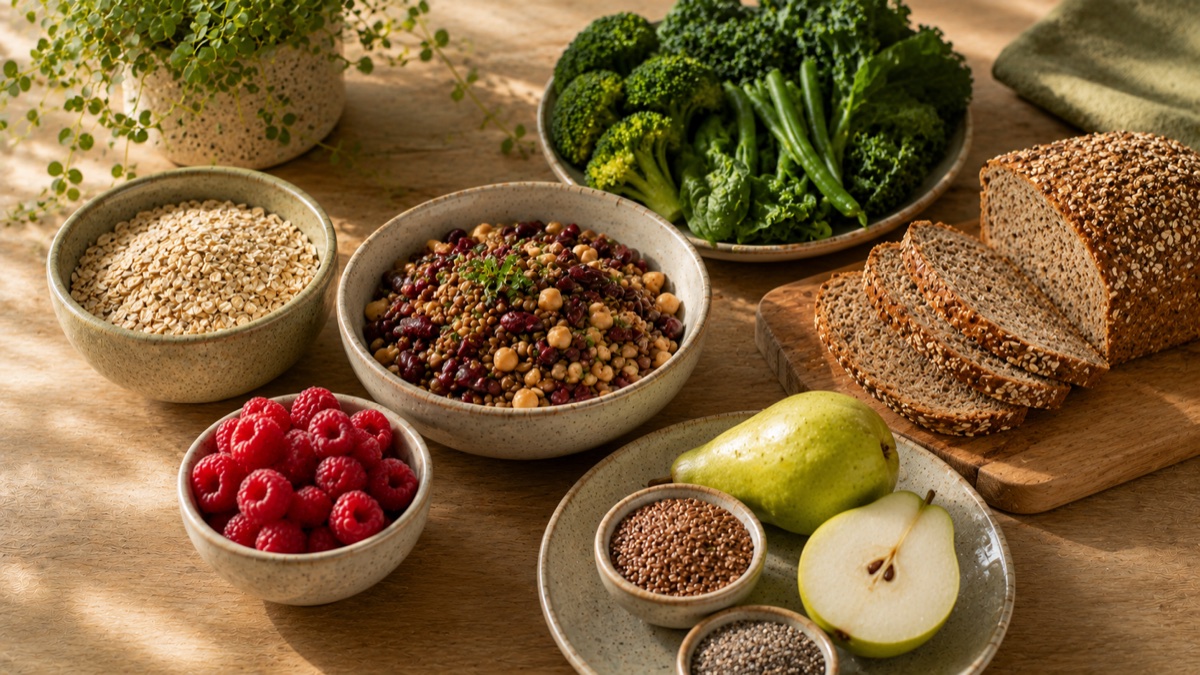
Fiber is quietly one of the most useful things on your plate — yet most people eat about half of what they need. It slows digestion, feeds your gut bacteria, steadies blood sugar and keeps you full.
How much, and why it helps
Aim for about 25–30 g of fiber a day. In studies, simply adding around 14 g more fiber daily led people to eat roughly 10% fewer calories without trying — because fiber is filling. That’s weight help with no dieting.
Easy ways to get there
- build meals on beans, lentils and chickpeas;
- choose whole grains — oats, buckwheat, barley, brown rice;
- keep the skins on fruit and vegetables;
- add seeds (chia, flax) and a small handful of nuts;
- make half your plate vegetables.
One cup of lentils alone is around 15 g.
📱 Want this on your phone? The free K Lab app gives you an assessment, a meal plan and a symptom tracker.
Download the app →Go slow and drink water
Jumping from low to high fiber overnight causes gas and bloating. Add it gradually over a couple of weeks and drink more water as you do — fiber works best with fluid. If bloating is a recurring problem, see our guide on bloating after meals.
Evidence-based PDF guides — anti-age, gut health, detox and more. Get them free, straight to your inbox.
Browse the guides →Frequently asked questions
How much fiber should I eat a day?
Around 25–30 g a day for most adults. Most people get only 12–15 g, so even small additions help.
Does fiber help with weight loss?
Yes, indirectly. Fiber is very filling, so higher-fiber meals tend to reduce overall calorie intake without conscious dieting.
Why does more fiber make me bloated?
Usually because it was added too fast. Increase fiber gradually over one to two weeks and drink more water, and the gut adjusts.
Sources
Meals that hit your fiber, effortlessly
The free K Lab assessment builds a plan and shopping list rich in fiber from real food — matched to your tastes, so 30 g a day feels easy.
Get K Lab on your phone
A free assessment, a 7-day meal plan, symptom and habit tracking — in English, Spanish and Russian.
Free to download — no card needed to start.
This article is educational and not medical advice. With a diagnosed gut condition, change fiber intake with your doctor’s guidance. Using K Lab does not create a doctor–patient relationship. Full medical disclaimer.