
Do you need to count calories to lose weight?
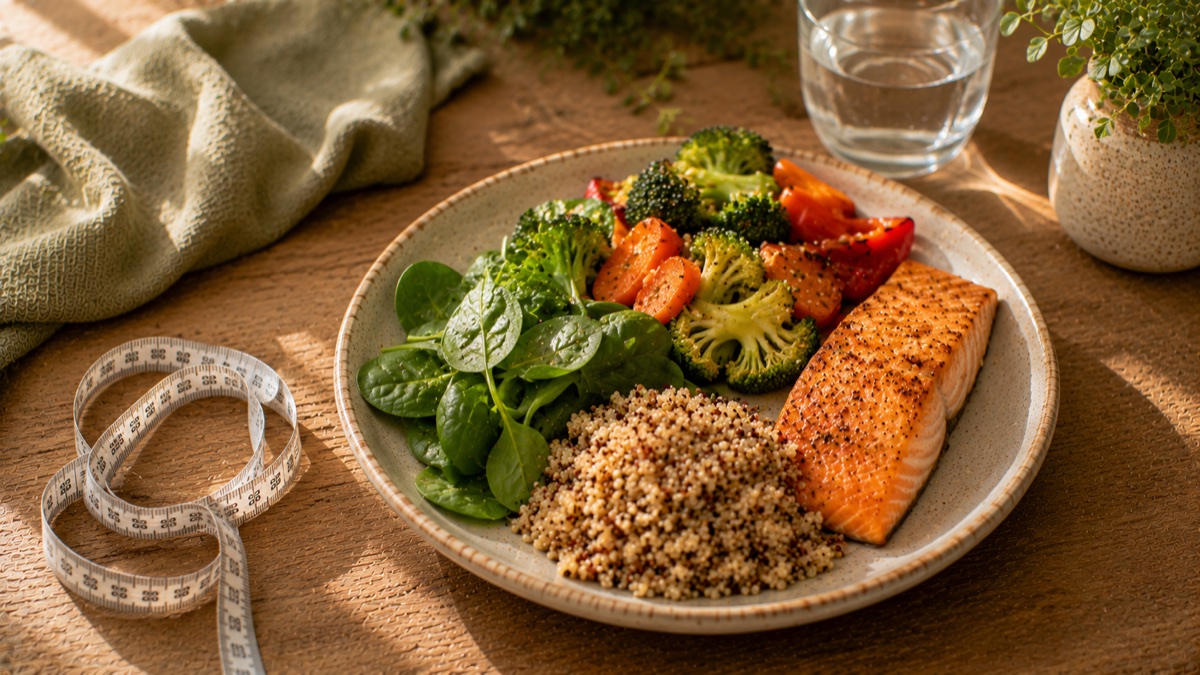
Weight loss does come down to an energy deficit — eating a bit less than you burn. But that doesn’t mean you have to count calories. For many people, tracking every bite is stressful and unsustainable, and there’s a simpler path.
What actually drives weight loss
Research is clear: at equal calories, the exact mix of carbs, fat and protein matters far less than the total and how consistently you stick to it. The best diet is the one you can actually keep — not the most precise spreadsheet.
Create a deficit without counting
- build a balanced plate — half vegetables, a palm of protein, a fist of slow carbs;
- get enough protein and fiber so you’re full on less;
- cut back on sugary drinks and ultra-processed snacks;
- eat slowly and stop at comfortably satisfied.
These naturally lower intake — no app needed.
📱 Want this on your phone? The free K Lab app gives you an assessment, a meal plan and a symptom tracker.
Download the app →When counting can help
Short-term tracking can be a useful learning tool — a week or two to see portion sizes and where calories hide. Just treat it as education, not a life sentence.
Evidence-based PDF guides — anti-age, gut health, detox and more. Get them free, straight to your inbox.
Browse the guides →Frequently asked questions
Do I have to count calories to lose weight?
No. A calorie deficit is what drives weight loss, but you can create one with balanced plates, more protein and fiber, and fewer sugary drinks — no tracking required.
Is counting calories accurate?
It’s rough at best — labels and portions vary. Short-term tracking is useful for learning portion sizes, but long-term it’s often stressful and hard to sustain.
What matters more than counting?
Total intake and consistency, driven by satisfying, protein- and fiber-rich meals you can maintain — not the precise macro split.
Lose weight without the spreadsheet
The free K Lab assessment builds satisfying, balanced meals that create a gentle deficit automatically — so you progress without counting every calorie.
Get K Lab on your phone
A free assessment, a 7-day meal plan, symptom and habit tracking — in English, Spanish and Russian.
Free to download — no card needed to start.
This article is educational and not medical advice. If you have a history of disordered eating, avoid calorie tracking and work with a professional. Using K Lab does not create a doctor–patient relationship. Full medical disclaimer.