
Fatty liver and nutrition: how food can help
A diagnosis of fatty liver — now often called MASLD, metabolic-associated steatotic liver disease — can feel alarming, but it is common and food choices genuinely help. This is not about blame or willpower; it is about a few steady, doable shifts. Everything below is educational and works best alongside your doctor, who can track your liver over time.
What fatty liver means
Fatty liver simply means extra fat has built up in liver cells, usually linked to how the body handles sugar, insulin and calories rather than to anything you did wrong. The encouraging part is that the liver is resilient and responds to changes in diet and daily movement. The aim is a sustainable eating pattern, not a punishing short-term cleanse — and there is no need for “detox” products, which do not treat the condition.
Ease off added sugar, especially in drinks
The single most useful place many people start is sugary drinks — sodas, sweetened juices, energy and coffee drinks. Fructose-heavy beverages are handled largely by the liver and can add to liver fat, so cutting back here often has an outsized payoff. Water, sparkling water, unsweetened tea and coffee are easy swaps. Reducing refined carbohydrates — white bread, pastries, packaged snacks — helps in the same direction.
A Mediterranean-style pattern
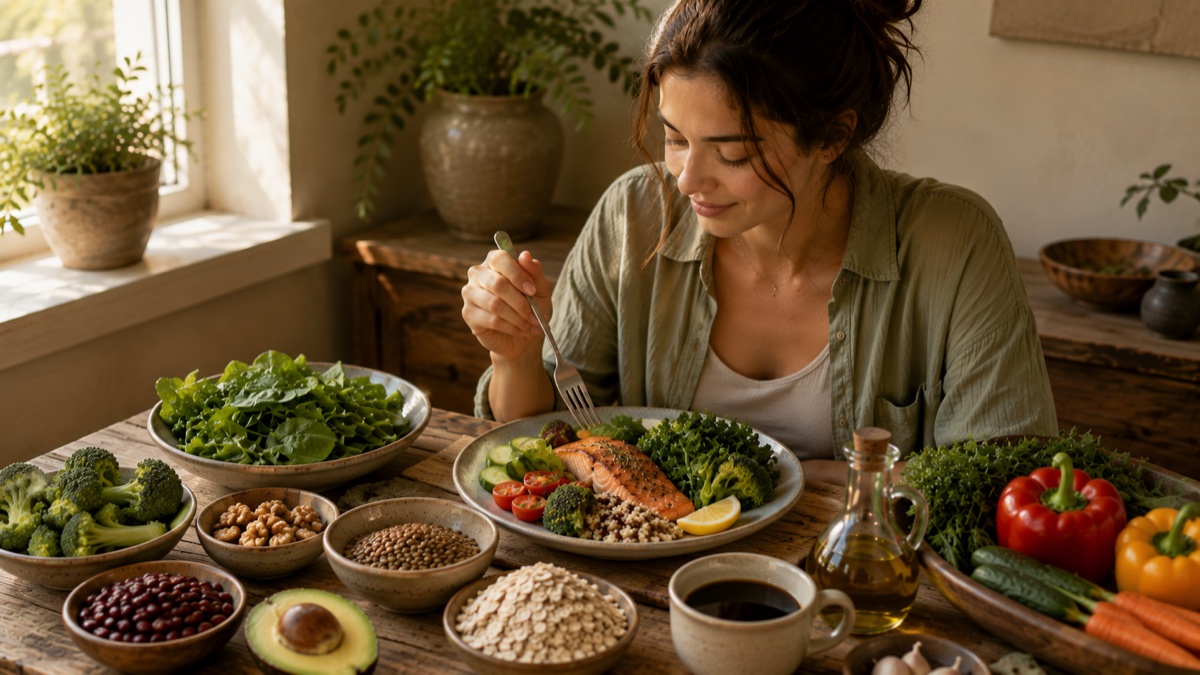
The eating pattern with the most support for liver health is broadly Mediterranean: vegetables and fruit, beans and lentils, whole grains, nuts, olive oil as the main fat, and fish, with less red and processed meat. Plenty of fibre steadies blood sugar and appetite, which supports the whole picture — our guide to eating more fibre is a practical starting point. If you drink alcohol, keeping it low or skipping it eases the load on your liver.
📱 Want this on your phone? The free K Lab app gives you an assessment, a meal plan and a symptom tracker.
Download the app →Weight, coffee and gentle myth-busting
If your doctor advises weight loss, know that gradual loss is what helps the liver — even a modest, steady reduction can make a real difference, while crash diets can backfire. A little good news for coffee lovers: plain coffee appears neutral-to-helpful for the liver, so there is no need to give it up. And you can safely ignore “liver flush,” detox teas and cleanse products — they are not evidence-based and can distract from changes that genuinely work.
Small steps, real support
You do not have to overhaul everything at once. Swap one sugary drink for water, add a serving of vegetables or beans, cook a little more at home, take a daily walk. These small, repeatable steps add up and are far easier to sustain than an all-or-nothing plan. Keep your doctor informed so your progress can be tracked and any medication or condition managed properly.
Evidence-based PDF guides — anti-age, gut health, detox and more. Get them free, straight to your inbox.
Browse the guides →Frequently asked questions
What foods should I limit with fatty liver?
The most useful cutbacks are sugary drinks (especially fructose-heavy ones), added sugar, refined carbohydrates like white bread and pastries, and heavily ultra-processed foods. Keeping alcohol low or avoiding it also eases the load on your liver.
Is coffee bad for a fatty liver?
Current evidence suggests plain coffee is neutral-to-helpful for the liver, so most people need not give it up. Watch the add-ons, though — sugary syrups and sweetened coffee drinks work against you. Check with your doctor about your own situation.
Do detox or liver-cleanse products help fatty liver?
No. Detox teas, liver flushes and cleanse supplements are not evidence-based and can distract from changes that genuinely work — less added sugar, a Mediterranean-style pattern, more fibre and, if advised, gradual weight loss. Talk to your doctor before trying supplements.
A gentle plan for your liver
The free K Lab assessment builds a Mediterranean-style, fibre-rich plan around your tastes — with easy swaps for sugary drinks and refined carbs, guided by a K Lab health coach and meant to sit alongside your doctor's care.
Get K Lab on your phone
A free assessment, a 7-day meal plan, symptom and habit tracking — in English, Spanish and Russian.
Free to download — no card needed to start.
This article is educational and not medical advice; if you have fatty liver, work with your doctor and do not start supplements or major diet changes without their guidance. Using K Lab does not create a doctor–patient relationship. Full medical disclaimer.