
Hidden sugar in food: where it hides and how to spot it
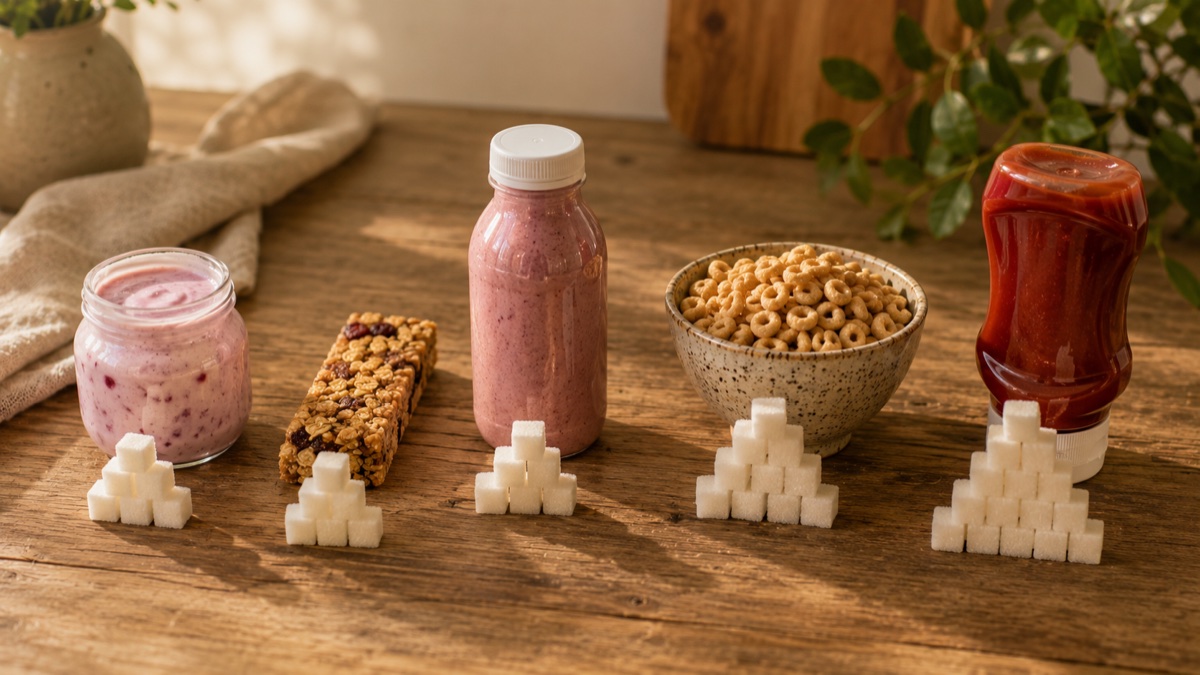
Most added sugar we eat isn't the spoonful in our coffee — it's already mixed into everyday foods that don't even taste especially sweet. Bread, pasta sauce, yogurt, salad dressing, breakfast cereal and a lot of "healthy" snacks quietly add up. The goal here isn't fear or cutting out every gram; it's simply knowing where sugar hides so your choices are yours to make.
How much added sugar is reasonable
There's a useful distinction: natural sugars in whole fruit, plain milk and vegetables come bundled with fiber, water and nutrients, and aren't the concern. Added sugars — put into foods during processing — are. The World Health Organization suggests keeping added ("free") sugars under about 10% of your daily calories, and ideally near 5% — roughly 25 g, about 6 teaspoons, a day for an average adult. For scale, a single can of regular soda can hit or pass that in one go.
Where it hides
The sneaky sources are rarely dessert. Manufacturers add sugar not only for taste but to extend shelf life, which is why it turns up in plainly savory foods too. Watch for it in:
- Drinks: soda, sweetened coffee, "vitamin" waters, energy drinks, and even many smoothies and fruit juices;
- Sauces & condiments: ketchup, barbecue and teriyaki sauce, pasta sauce, sweet chili, mayonnaise, some salad dressings — a single tablespoon of ketchup can carry about a teaspoon of sugar;
- "Healthy" foods: flavored yogurt, granola, cereal bars, protein bars, dried-fruit snacks, plant milks;
- Staples: sliced bread, crackers, instant oatmeal, deli meats and sausages, and many low-fat products where sugar replaces the fat.
Sugary drinks matter most because they're easy to overdo and don't fill you up the way food does.
📱 Want this on your phone? The free K Lab app gives you an assessment, a meal plan and a symptom tracker.
Download the app →How to spot it on the label
Two habits do most of the work. First, on the nutrition panel look for "added sugars" (many labels now list it separately from total sugars). Second, scan the ingredients list — since ingredients are listed by weight, sugar near the top means there's a lot of it. It also travels under roughly fifty aliases: sucrose, glucose, dextrose, maltose, fructose, corn syrup, high-fructose corn syrup, cane juice, molasses, agave, honey, malt, barley malt, rice syrup, maltodextrin, invert sugar, coconut sugar and date sugar — and most words ending in "-ose" or containing "syrup." Several different sugars listed separately can add up to more than the first ingredient. If you'd like a full walkthrough, see our guide to reading food labels.
Realistic swaps
You don't need to go sugar-free — just shift the defaults:
- choose plain yogurt and add your own fruit instead of pre-sweetened;
- swap soda and juice for water, sparkling water or unsweetened tea;
- read two or three sauce and cereal brands and pick the lower-sugar one — they vary a lot;
- pick bars and snacks whose ingredient list is just dried fruit and nuts, with no added sugar;
- eat whole fruit rather than fruit juice for sweetness plus fiber;
- let your palate adjust — cravings for very sweet foods usually fade over a couple of weeks. Our guide on how to stop sugar cravings goes deeper.
Evidence-based PDF guides — anti-age, gut health, detox and more. Get them free, straight to your inbox.
Browse the guides →Frequently asked questions
How much added sugar per day is okay?
The World Health Organization suggests keeping added sugars under about 10% of daily calories, and ideally near 5% — roughly 25 g, about 6 teaspoons, for an average adult. Natural sugar in whole fruit and plain milk isn't the concern.
What are other names for sugar on labels?
Sugar appears under many names, including sucrose, glucose, dextrose, fructose, maltose, corn syrup, high-fructose corn syrup, cane juice, molasses, agave, honey, malt, maltodextrin and invert sugar. Most words ending in '-ose' or containing 'syrup' are sugars.
Is the sugar in fruit bad for me?
No. Whole fruit contains natural sugar bundled with fiber, water and nutrients, which slows absorption and fills you up. The concern is added sugar in processed foods and drinks, not whole fruit.
Cut hidden sugar without cutting joy
The free K Lab assessment builds meals and a shopping list low in hidden sugar but full of flavor — matched to your tastes, so eating well feels easy rather than restrictive.
Get K Lab on your phone
A free assessment, a 7-day meal plan, symptom and habit tracking — in English, Spanish and Russian.
Free to download — no card needed to start.
This article is educational and not medical advice. If you have diabetes or another condition affecting blood sugar, discuss your diet with your doctor. Using K Lab does not create a doctor–patient relationship. Full medical disclaimer.