
Gut health basics: fiber, fermented foods and probiotics
“Gut health” is everywhere, and so are expensive powders promising to fix it. The reassuring truth: the biggest wins are simple, cheap and food-based.
Fiber and plant variety come first
Your gut bacteria feed on fiber. The single most useful habit is eating more plants and more kinds of plants — a common goal is around 30 different plant foods a week (vegetables, fruit, legumes, whole grains, nuts, seeds, herbs). Variety feeds a more diverse, resilient microbiome.
Fermented foods
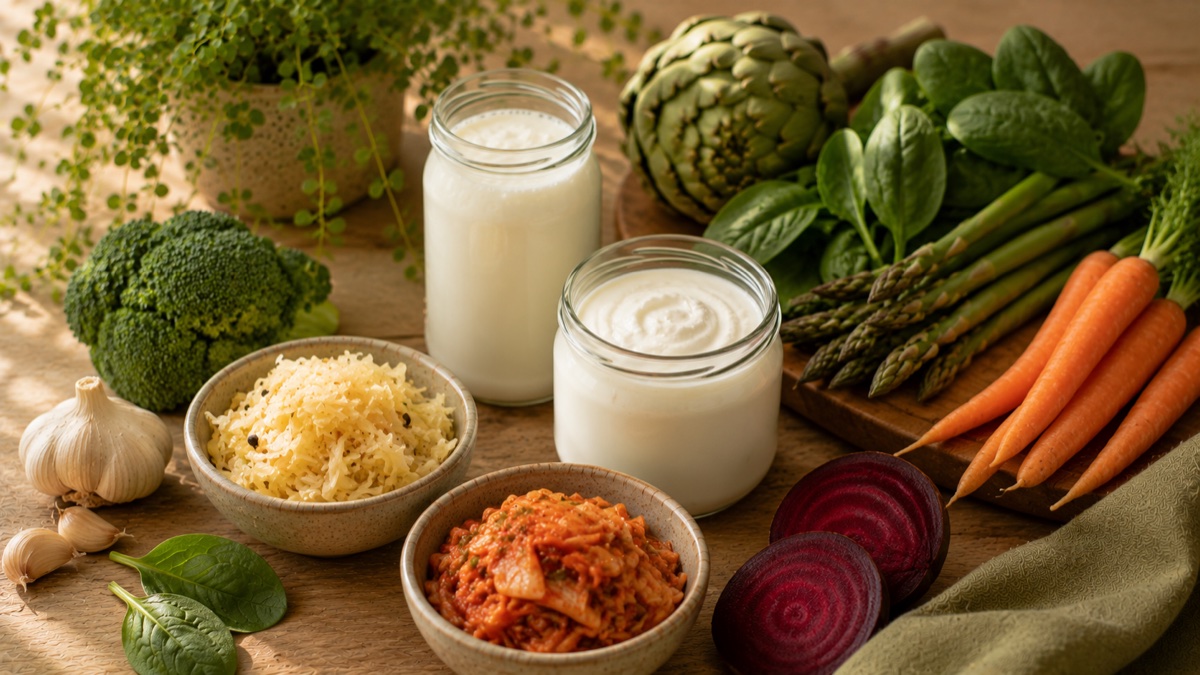
Foods like yogurt, kefir, sauerkraut and kimchi add live microbes and may support gut diversity. Add them gradually; they’re a helpful complement to fiber, not a replacement.
📱 Want this on your phone? The free K Lab app gives you an assessment, a meal plan and a symptom tracker.
Download the app →The truth about probiotics and “dysbiosis”
Probiotic supplements are strain-specific — a given strain helps a given situation, and most people don’t need a daily pill. “Dysbiosis” isn’t a single diagnosis, and commercial “gut microbiome tests” aren’t validated to guide treatment. Save your money for vegetables. Ongoing gut symptoms? See our guides on bloating and low-FODMAP, and talk to a doctor.
Evidence-based PDF guides — anti-age, gut health, detox and more. Get them free, straight to your inbox.
Browse the guides →Frequently asked questions
What’s the best way to improve gut health?
Eat more fiber and a wide variety of plants — aim for around 30 different plant foods a week. Add fermented foods gradually. This beats any supplement for most people.
Do I need a probiotic supplement?
Usually not. Probiotics are strain-specific and most healthy people do better focusing on fiber and fermented foods than on a daily pill.
Are gut microbiome tests worth it?
Generally no. Commercial microbiome and “dysbiosis” tests aren’t validated to guide treatment. Fiber, plant variety and, if needed, a doctor’s input are better investments.
Feed your gut, effortlessly
The free K Lab assessment builds a fiber-rich, plant-varied plan and shopping list — a simple, tasty way to support your gut every day.
Get K Lab on your phone
A free assessment, a 7-day meal plan, symptom and habit tracking — in English, Spanish and Russian.
Free to download — no card needed to start.
This article is educational and not medical advice. Persistent gut symptoms or any red flags should be checked by a doctor. Using K Lab does not create a doctor–patient relationship. Full medical disclaimer.