
Intermittent fasting basics: what it is and what works
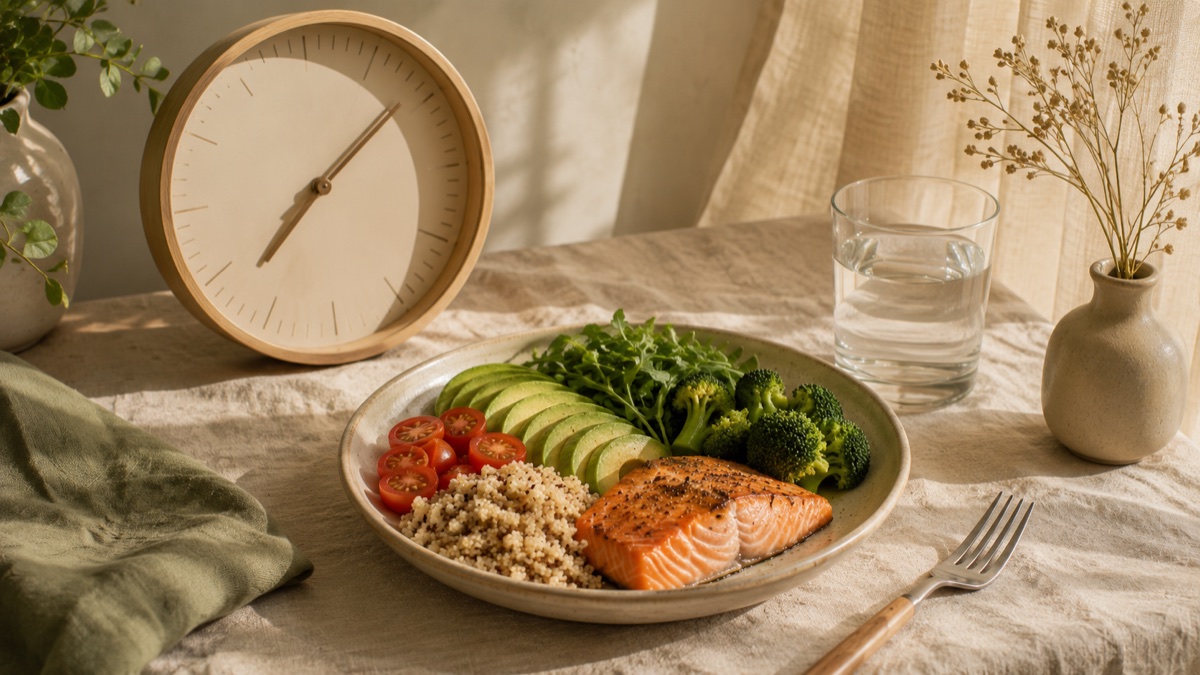
Intermittent fasting (IF) isn't a diet in the usual sense — it says nothing about what you eat, only when. You cycle between set eating and fasting windows. It's genuinely popular and can work for some people, but it's a tool, not magic. Here's what it is, what the evidence actually shows, and who should be careful.
The common schedules
Most people use one of a few simple patterns:
- 16:8 (time-restricted eating): eat within an 8-hour window and fast for the other 16 — for example, meals between noon and 8 p.m. This is the most popular version;
- 5:2: eat normally five days a week and keep calories low (often around 500–600) on two non-consecutive days;
- Alternate-day patterns, which are stricter and harder to sustain.
None is inherently "best" — the right one is the one you can keep up without misery.
What the evidence actually shows
Here's the honest version: for weight loss, intermittent fasting works mainly because it helps some people eat fewer calories — a shorter eating window often means fewer meals and less late-night snacking. In head-to-head studies, IF produces results similar to standard calorie-reduced diets, not dramatically better. It's one workable approach among several, and whether you count calories or watch the clock, the same fundamentals apply — see do I need to count calories. Some people also like that it simplifies decisions and meal timing. Claims that fasting uniquely "resets" metabolism or "detoxes" the body are overstated: reported metabolic perks, like better insulin sensitivity, tend to be modest and are largely explained by the weight loss itself, and the science is still evolving. Fasting also isn't required for good health — the foundation is a regular pattern of balanced, protein- and fiber-rich meals, eaten without long stretches of going hungry. Treat a fasting window as one optional tool you can add on top if it genuinely helps you eat well.
📱 Want this on your phone? The free K Lab app gives you an assessment, a meal plan and a symptom tracker.
Download the app →Who should be cautious or avoid it
Intermittent fasting is not right for everyone, and for some it can be harmful. Be cautious or skip it if you are:
- pregnant or breastfeeding, or trying to conceive;
- someone with a history of disordered eating — rigid rules around food can trigger unhealthy patterns;
- living with diabetes or taking medications (especially insulin or others that lower blood sugar), where fasting can cause dangerous lows;
- underweight, a child or teen, or managing another medical condition.
If any of these apply, talk to your doctor before trying it — this is a conversation worth having first, not after.
Practical tips if you try it
If you're healthy and curious, a gentle start beats an extreme one:
- begin with a modest window (say 12:12, then 14:10) rather than jumping to long fasts;
- drink water, and plain tea or coffee are usually fine during the fast;
- what you eat still matters — a shorter window is no license to fill it with junk. Build meals around protein, fiber and vegetables;
- don't over-restrict: skipping meals only to binge later defeats the point;
- stop if you feel dizzy, shaky, exhausted or preoccupied with food — that's a signal it isn't working for you.
Evidence-based PDF guides — anti-age, gut health, detox and more. Get them free, straight to your inbox.
Browse the guides →Frequently asked questions
Is intermittent fasting better than other diets?
Not really. In head-to-head studies it produces weight-loss results similar to standard calorie-reduced diets. It works mainly by helping some people eat less, so the best approach is whichever one you can sustain.
What is the easiest way to start intermittent fasting?
Start gentle: try a 12-hour overnight fast, then ease toward 14:10 or 16:8 if it feels comfortable. Drink water, and keep meals built around protein, fiber and vegetables rather than filling the window with junk.
Who should not do intermittent fasting?
Avoid or get medical advice first if you are pregnant or breastfeeding, have a history of disordered eating, have diabetes or take blood-sugar medications, are underweight, or are a child or teen. Talk to your doctor before starting.
Sources
Find an eating pattern that fits you
The free K Lab assessment helps you build balanced, protein- and fiber-rich meals around a schedule you can actually keep — with or without a fasting window, matched to your goals and tastes.
Get K Lab on your phone
A free assessment, a 7-day meal plan, symptom and habit tracking — in English, Spanish and Russian.
Free to download — no card needed to start.
This article is educational and not medical advice. Talk to your doctor before starting intermittent fasting, especially if you are pregnant, have a medical condition or take medication. Using K Lab does not create a doctor–patient relationship. Full medical disclaimer.