
Probiotics vs prebiotics: the simple, honest difference
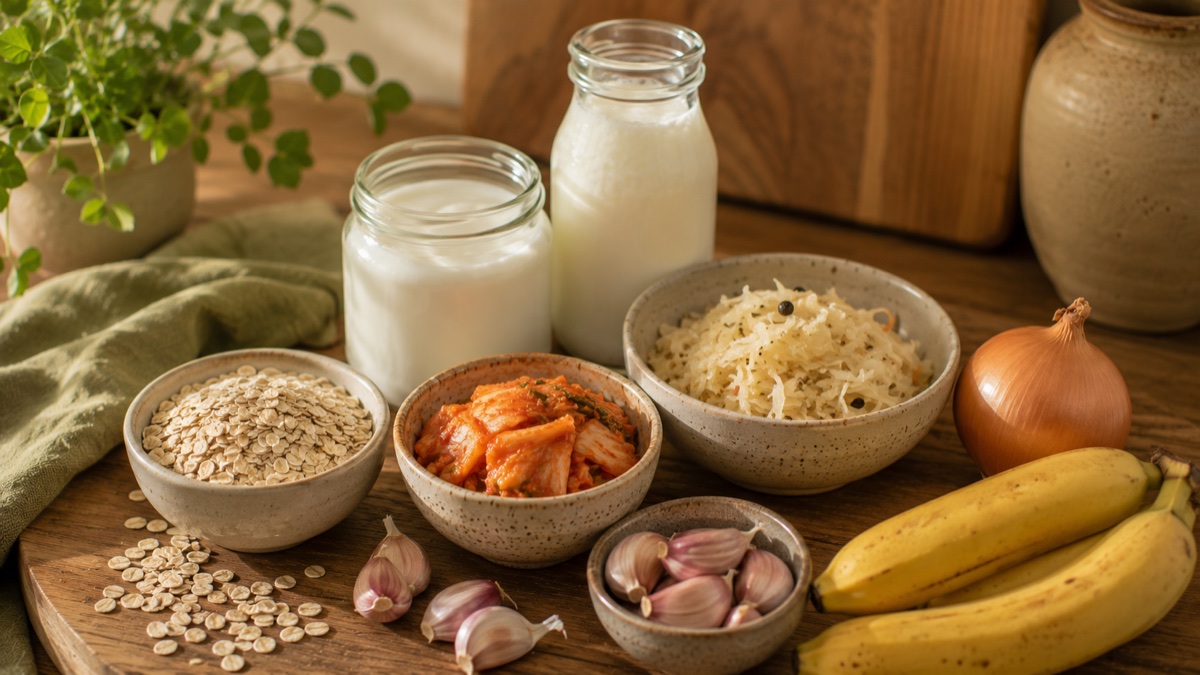
Probiotics and prebiotics sound almost identical, get shelved side by side, and are easy to mix up — but they do different jobs. In one line: probiotics are the live bacteria, and prebiotics are the fibres that feed them. Both support the gut microbiome, the community of trillions of microbes that helps digest food, make certain vitamins and train your immune system — much of which sits around the gut. The good news is that you can support yours with everyday food rather than a cupboard of pills.
Probiotics: the live bacteria
Probiotics are live microorganisms that, in adequate amounts, may offer a health benefit. You do not need a supplement to get them — many familiar foods are naturally rich in them:
- Yogurt and kefir with live cultures;
- Fermented vegetables and drinks like sauerkraut, kimchi and kombucha;
- Miso, tempeh and traditionally fermented foods.
Including a variety of these regularly is a gentle, food-first way to top up the live cultures reaching your gut.
Prebiotics: the food for your bacteria
Prebiotics are types of fibre your own body cannot digest, but your gut bacteria can. They travel to the colon and become fuel for the helpful microbes already living there. Everyday prebiotic-rich foods include:
- Onion, garlic and leeks;
- Asparagus and Jerusalem artichoke;
- Oats and barley;
- Legumes — lentils, chickpeas, beans;
- Slightly under-ripe bananas.
As your bacteria ferment this fibre, they make short-chain fatty acids such as butyrate that help nourish the cells lining your colon.
This is really just another reason to look after your gut by eating a wide range of plants — the fibre does double duty.
📱 Want this on your phone? The free K Lab app gives you an assessment, a meal plan and a symptom tracker.
Download the app →Are probiotic supplements worth it?
Here is the honest answer: it depends. Probiotic effects are highly strain-specific — a strain shown to help one situation (for example, certain cases of antibiotic-related diarrhoea) tells you little about a different product for a different problem. Marketing often outruns the evidence, which for general "gut health" in healthy people is mixed. A supplement can have a place, but it is not a shortcut around a poor diet. If you have a specific condition, it is worth discussing a particular strain with your doctor rather than picking one off a shelf.
Simple food-first steps
For most people, the biggest wins come from the plate, not the pharmacy:
- Eat more plants, and more kinds — variety feeds microbial diversity, which is a marker of a healthy gut;
- Include a fermented food most days, such as yogurt or kefir;
- Build up fibre gradually — many adults do well aiming toward around 30 g a day — to avoid bloating, and drink enough water.
Do this consistently and you are feeding a healthier microbiome from both directions — live cultures in, and plenty of fibre to keep them thriving.
Evidence-based PDF guides — anti-age, gut health, detox and more. Get them free, straight to your inbox.
Browse the guides →Frequently asked questions
What is the difference between probiotics and prebiotics?
Probiotics are live beneficial bacteria found in foods like yogurt, kefir and fermented vegetables. Prebiotics are fibres — in foods like onion, garlic, oats and legumes — that your own body cannot digest but that feed those bacteria. You benefit from both.
Do I need to take a probiotic supplement?
Not necessarily. Probiotic effects are strain-specific and the evidence for general gut health in healthy people is mixed. A varied, plant-rich diet with some fermented foods covers most people. For a specific condition, ask your doctor about a particular strain.
What foods feed my gut bacteria?
Prebiotic fibres feed them: onion, garlic, leeks and asparagus, oats and barley, legumes such as lentils and chickpeas, and slightly under-ripe bananas. Eating a wide variety of plants is the simplest way to support a diverse, healthy microbiome.
Sources
Feed your gut, food first
The free K Lab assessment builds a varied, fibre-rich plan with fermented foods your gut bacteria love — a simple, food-first way to support your microbiome without a cupboard of supplements.
Get K Lab on your phone
A free assessment, a 7-day meal plan, symptom and habit tracking — in English, Spanish and Russian.
Free to download — no card needed to start.
This article is educational and not medical advice. If you have a digestive condition or a weakened immune system, ask your doctor before using probiotic supplements. Using K Lab does not create a doctor–patient relationship. Full medical disclaimer.