
What to eat when you're sick: gentle food for a cold or flu
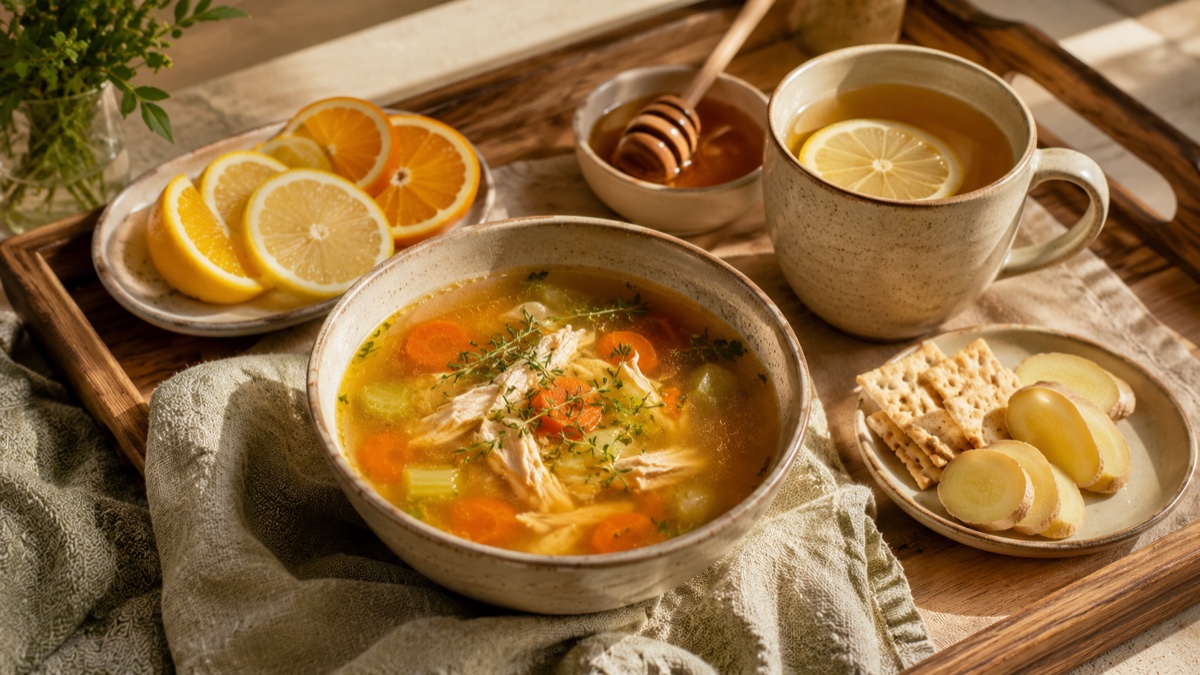
When a cold or flu hits, your appetite often fades — and that's normal. The goal isn't to force big meals; it's to stay hydrated, keep food gentle and easy to digest, and give your body what it needs to do its work of recovering. None of this replaces medical care, but it can make the days more comfortable.
Fluids come first
Fever, sweating and a runny nose all lose fluid, and staying hydrated helps thin mucus and keeps you comfortable. Reach for warm, soothing drinks throughout the day:
- water, still or with a squeeze of lemon;
- warm herbal teas and unsweetened fruit compotes;
- clear broths and light soups.
Warm fluids feel especially good on a sore throat, and sipping often is easier than large amounts at once.
Keep food light and easy to digest
Digesting a heavy meal takes energy your body would rather spend recovering. Favor simple, easy-to-digest foods and eat to appetite rather than by the clock:
- broth-based soups and chicken soup;
- cooked vegetables, oats, rice or other soft grains;
- fruit that's gentle on the stomach, like banana or stewed apple.
If you can only manage a little, that's fine — small, frequent bites beat forcing a full plate.
Don't skip protein
Protein is the raw material for the antibodies and immune cells your body is busy making, and it helps repair tissue. Even when appetite is low, aim for a little protein at each eating occasion:
- chicken or bone broth, and the meat from a simple soup;
- eggs, yogurt or kefir;
- lentils or soft beans blended into soup.
A warm bowl of chicken soup is a genuinely practical way to get fluid and protein together. For more on daily targets, see our guide to how much protein you need.
📱 Want this on your phone? The free K Lab app gives you an assessment, a meal plan and a symptom tracker.
Download the app →Foods rich in vitamin C and zinc
A varied plate naturally supplies the nutrients your immune system leans on. Two worth featuring are vitamin C (citrus, kiwi, bell peppers, leafy greens, sauerkraut) and zinc (pumpkin seeds, meat, shellfish). Fermented foods like yogurt and kefir add probiotics that support the gut, where much of the immune system lives. Food first is the sensible approach — ask your doctor before adding high-dose supplements, which aren't a substitute for care.
Rest is part of nutrition
Sleep is when the body does much of its repair, so more rest and less strain genuinely help. Keep the room aired out, go easy on hard exercise, and let hunger guide you back to normal eating as you recover. If symptoms are severe, last a long time, or worry you, see a doctor.
Evidence-based PDF guides — anti-age, gut health, detox and more. Get them free, straight to your inbox.
Browse the guides →Frequently asked questions
What should I eat when I have no appetite?
Don't force big meals. Focus on fluids — water, broth, herbal tea — and small, easy bites like soup, yogurt or stewed fruit. Appetite usually returns as you recover; let it guide you back to normal eating.
Is chicken soup actually good when you're sick?
Yes, in a practical sense. It combines warm fluid, easy protein and vegetables in one comforting bowl, which helps you stay hydrated and nourished when you don't feel like eating much.
Should I take vitamin C or zinc supplements for a cold?
Food first is the sensible approach — citrus, peppers and greens for vitamin C, pumpkin seeds and meat for zinc. High-dose supplements aren't a proven cure and aren't a substitute for care, so ask your doctor before adding them.
Sources
Eat well, even on off days
The free K Lab assessment builds gentle, nourishing meals around your tastes — so you have easy, comforting options ready for the days you're under the weather.
Get K Lab on your phone
A free assessment, a 7-day meal plan, symptom and habit tracking — in English, Spanish and Russian.
Free to download — no card needed to start.
This article is educational and not medical advice. If symptoms are severe, persistent, or worrying, see a doctor. Using K Lab does not create a doctor–patient relationship. Full medical disclaimer.