
Insulin resistance: early signs and how food helps
Insulin resistance means your cells respond less readily to insulin, the hormone that ushers glucose out of the blood and into cells for energy. To compensate, the pancreas makes more insulin. For a while blood sugar can look normal on a basic test — which is exactly why the condition often builds quietly for years. The good news: everyday habits, especially how you eat and move, strongly influence insulin sensitivity.
Early signs worth noticing
Insulin resistance has no single symptom, but a cluster of clues can add up. Common ones include feeling hungry soon after eating, strong sugar or carb cravings, an afternoon energy crash, and fat that settles around the waist. Some people notice darker, velvety skin patches on the neck or armpits (called acanthosis nigricans), fluid retention, or frequent thirst. None of these prove insulin resistance on their own — they simply signal it may be worth a conversation with your doctor.
Which lab tests to discuss with your doctor
Only a clinician can diagnose insulin resistance, but a few blood tests help paint the picture. As general guidance, a fasting glucose under 100 mg/dL is typical, 100–125 mg/dL falls in the prediabetes range, and 126+ suggests diabetes. HbA1c reflects average blood sugar over ~3 months (under 5.7% typical; 5.7–6.4% prediabetes). A fasting insulin test can reveal high insulin even when glucose still looks normal. Bring these up at your next check-up rather than self-interpreting numbers — context and repeat testing matter.
📱 Want this on your phone? The free K Lab app gives you an assessment, a meal plan and a symptom tracker.
Download the app →How food helps steady blood sugar
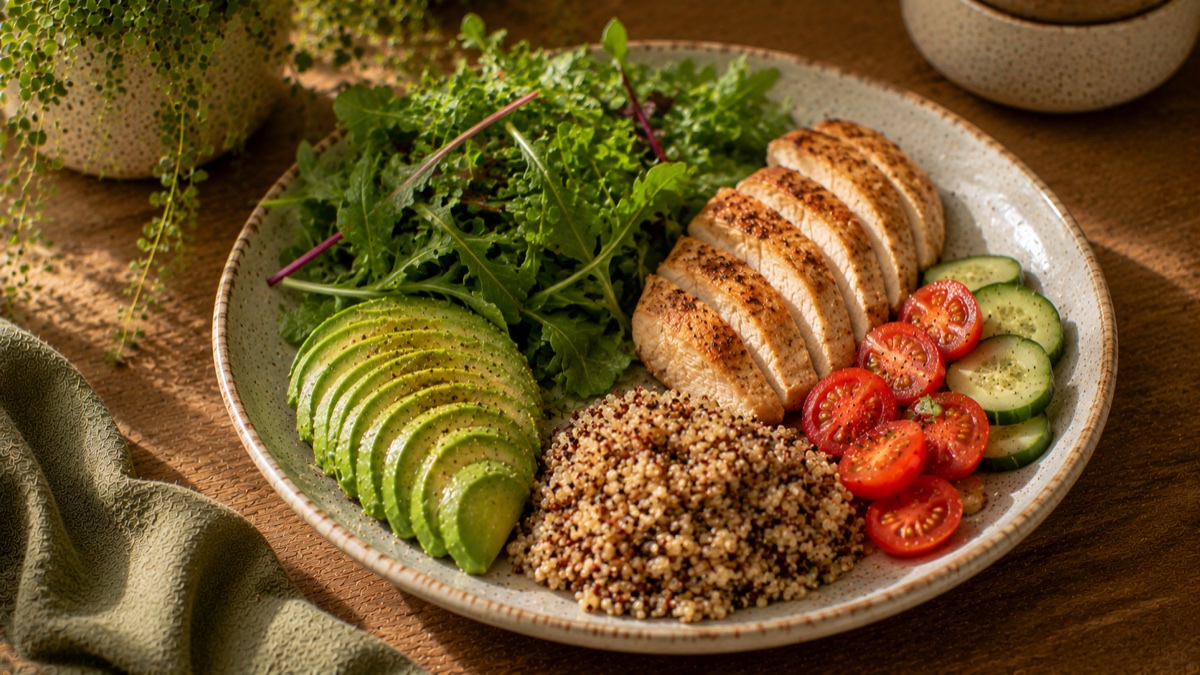
Food is one of the most direct levers for insulin sensitivity. Build each meal around a balanced plate: plenty of vegetables, quality protein, healthy fats, and slow, high-fiber carbohydrates instead of refined ones. This blunts the sharp glucose spikes that keep insulin high. Practical moves: cut sugary drinks and ultra-processed snacks, favor whole foods that give you steady energy, and avoid constant grazing so insulin gets a rest between meals. Regular movement — even a daily walk — makes muscles pull glucose from the blood more readily. Small, consistent changes compound over time.
Next step: what to eat with insulin resistance — plus a 7-day meal plan.
How do you know if you have insulin resistance?
You can't confirm it at home — but you can tell whether it's worth asking your doctor about. The honest answer is that insulin resistance is judged from a combination of blood work and context, not from any single symptom. Reasons to raise it at your next appointment:
- Several of the signs above showing up together, most days, for months — not one bad week.
- Waist circumference above roughly 35 inches (88 cm) for women or 40 inches (102 cm) for men, which tracks with visceral fat better than weight does.
- A first-degree relative with type 2 diabetes, or a personal history of gestational diabetes or PCOS.
- A previous fasting glucose in the 100–125 mg/dL range, or an HbA1c of 5.7–6.4% — the prediabetes bands in the ADA Standards of Care.
- Darkened, velvety skin in body folds (acanthosis nigricans) or a cluster of new skin tags, which often accompany higher insulin levels.
None of these is proof, and plenty of people with insulin resistance have none of the visible signs at all. That's the point of testing rather than guessing.
Fasting insulin and HOMA-IR: useful, but read them carefully
Beyond glucose and HbA1c, two numbers come up often. Fasting insulin measures how much insulin your pancreas is producing to keep glucose normal — it can rise years before glucose does. HOMA-IR is not a separate blood draw but a calculation from fasting glucose and fasting insulin together, used as an index of how resistant your tissues appear to be.
The caveat matters: there is no single internationally agreed HOMA-IR cutoff. Insulin assays differ between laboratories and healthy ranges differ between populations, so the same sample can produce different interpretations in different clinics. HOMA-IR is a research and screening tool, not a diagnostic line in the sand — which is why it belongs in a conversation with your doctor rather than in a self-assessment.
Insulin resistance, high insulin, prediabetes — the same thing?
These terms overlap and get used loosely, including by people searching for answers. Roughly:
- Insulin resistance — cells respond less readily to insulin. The underlying mechanism.
- High insulin (hyperinsulinaemia) — the pancreas compensating. Often the earliest measurable consequence.
- Prediabetes — glucose has drifted above normal but below the diabetes threshold. A defined diagnostic band, not a synonym.
- "Insulin intolerance" — not a clinical term; people generally mean insulin resistance.
You can be insulin resistant with entirely normal glucose, which is exactly why a single normal fasting glucose does not rule it out.
What the evidence says actually moves the needle
The strongest data here comes from the Diabetes Prevention Program, a large randomised trial in adults with prediabetes. Structured lifestyle change — modest weight loss of around 7% plus about 150 minutes of activity a week — cut progression to type 2 diabetes by 58%, outperforming metformin (31%) in the same trial. That is an unusually large effect for a lifestyle intervention, and it is the reason food and movement are the first line rather than an afterthought.
Worth knowing about the parts people skip: resistance training improves insulin sensitivity through a different route than aerobic exercise, so both earn their place. A short walk after your largest meal blunts the glucose rise from that meal. And short sleep measurably reduces insulin sensitivity in controlled studies — several nights of restricted sleep are enough to shift it in healthy volunteers, which makes sleep a blood-sugar variable, not just an energy one.
What doesn't help
No supplement, tea or "detox" protocol has been shown to reverse insulin resistance, and marketing in this category runs well ahead of the evidence. Cutting carbohydrates to near zero isn't necessary either — trials comparing diets at matched calories find adherence matters more than the macronutrient split. Fibre, protein at each meal and fewer sugary drinks are unglamorous and better supported.
When to see a doctor sooner rather than later
Some symptoms shouldn't wait for a routine check-up: intense thirst with frequent urination, unexplained weight loss, blurred vision, or persistent fatigue that's new and severe. These can indicate blood sugar that is already high and need prompt medical assessment, not dietary experimentation.
Evidence-based PDF guides — anti-age, gut health, detox and more. Get them free, straight to your inbox.
Browse the guides →Frequently asked questions
What are the early signs of insulin resistance?
Common clues include hunger soon after eating, strong sugar cravings, afternoon energy crashes, weight settling around the waist, and sometimes darker skin patches on the neck or armpits. None confirm it alone — they signal it's worth discussing with your doctor.
What blood tests show insulin resistance?
Fasting glucose, HbA1c, and fasting insulin all help. Fasting glucose of 100–125 mg/dL or HbA1c of 5.7–6.4% falls in the prediabetes range, and high fasting insulin can appear before glucose rises. Discuss results with your doctor.
Can food improve insulin sensitivity?
Diet strongly influences it. Balanced plates with fiber, protein and slow carbs, fewer sugary drinks and ultra-processed snacks, and less constant grazing all help keep insulin lower. Regular movement adds to the effect.
How can I tell if I have insulin resistance?
Not from symptoms alone. A cluster of signs lasting months, a larger waist, family history of type 2 diabetes, or a past fasting glucose of 100–125 mg/dL are all reasons to ask your doctor for blood work — fasting glucose, HbA1c and sometimes fasting insulin.
What is HOMA-IR?
An index calculated from fasting glucose and fasting insulin, used to estimate insulin resistance. There is no universal cutoff — insulin assays and reference ranges vary between laboratories — so it should be interpreted by a clinician alongside your other results.
Can insulin resistance be improved?
Insulin sensitivity does respond to food, activity and sleep. In the Diabetes Prevention Program, structured lifestyle change reduced progression from prediabetes to type 2 diabetes by 58%, and many participants returned to normal glucose levels. That is improvement, not a guaranteed cure, and it works best alongside medical follow-up.
Sources
See where your habits stand
The free K Lab assessment reviews your eating patterns and builds balanced, fiber- and protein-rich meals that support steadier blood sugar — a practical starting point alongside your doctor's guidance.
Get K Lab on your phone
A free assessment, a 7-day meal plan, symptom and habit tracking — in English, Spanish and Russian.
Free to download — no card needed to start.
This article is educational and not medical advice. Discuss any symptoms or lab results with your doctor. Using K Lab does not create a doctor–patient relationship. Full medical disclaimer.