
Underactive thyroid: tired, cold, gaining weight? Nutrition basics
Constant fatigue, feeling cold when others are comfortable, unexplained weight gain, dry skin, brain fog — it's easy to shrug these off as stress or a busy life. But together they can point to an underactive thyroid (hypothyroidism), when the gland that sets your metabolic pace isn't making enough hormone. The right move isn't to self-diagnose or start supplements — it's to get tested and understand how food fits in.
Get tested — don't self-diagnose
If these symptoms sound familiar, ask your doctor for a thyroid blood test rather than guessing. The thyroid influences body temperature, heart rate, digestion, energy and weight, so an underactive gland can look like a dozen other things. A simple TSH test (often with free T4) is the standard first step, and it's the only way to know what's actually going on.
The most common cause of hypothyroidism is an autoimmune condition called Hashimoto's, but that is a diagnosis only a doctor can make — through blood work, not symptoms alone. Persistent tiredness has many possible causes, including low iron, so testing keeps you from chasing the wrong fix.
Nutrients your thyroid needs — in balance
A few minerals are essential for making and activating thyroid hormone, but more is not better. The goal is sufficiency, not megadoses.
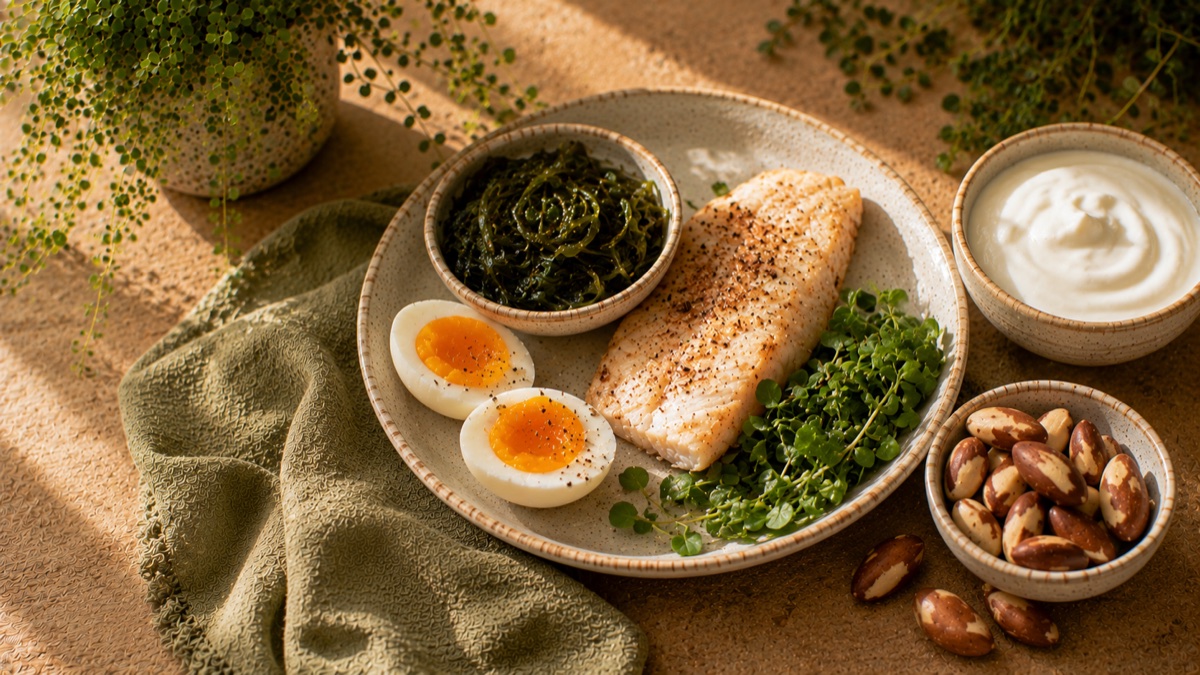
- Iodine is a building block of thyroid hormone — but balance matters more than volume. Both too little and too much iodine can disrupt the thyroid, so do not take high-dose iodine or kelp supplements to 'boost' it. Regular seafood, dairy, eggs and iodized salt usually cover normal needs.
- Selenium helps convert thyroid hormone into its active form and protects the gland. A couple of Brazil nuts, fish, eggs or a little liver supply plenty; high-dose supplements can be harmful.
- Zinc supports hormone production. Find it in beef, shellfish, pumpkin seeds and legumes.
- Iron is needed for thyroid enzymes to work; low iron often travels alongside thyroid issues. Red meat, organ meats, legumes and dark greens help.
Whole foods deliver these in amounts your body can handle. Supplements should come from a doctor's guidance after testing, not guesswork.
📱 Want this on your phone? The free K Lab app gives you an assessment, a meal plan and a symptom tracker.
Download the app →Build a thyroid-friendly plate
You can't out-eat a thyroid problem, but a balanced diet gives the gland what it needs and supports your energy alongside treatment. Aim for enough protein at each meal — meat, fish, eggs and dairy also provide the tyrosine and minerals thyroid hormone is built from.
Fill the rest of the plate with vegetables, slow carbohydrates and healthy fats for steady energy, and lean on variety so you naturally cover iodine, selenium, zinc and iron. Crash diets and very low-calorie eating can actually slow thyroid output, so consistent, adequate meals beat restriction. Nutrition supports thyroid health — it doesn't replace the diagnosis and treatment your doctor provides.
Evidence-based PDF guides — anti-age, gut health, detox and more. Get them free, straight to your inbox.
Browse the guides →Frequently asked questions
What are the signs of an underactive thyroid?
Common signs include persistent fatigue, feeling cold, unexplained weight gain, dry skin, hair thinning, constipation and brain fog. These overlap with many conditions, so they're reasons to get a thyroid blood test — not to self-diagnose.
Should I take iodine for my thyroid?
Not on your own. Iodine is essential, but both too little and too much can harm the thyroid, so high-dose iodine or kelp supplements can backfire. Most people meet their needs through seafood, dairy, eggs and iodized salt; only supplement under a doctor's guidance.
Can diet cure an underactive thyroid?
No. Diet can supply the iodine, selenium, zinc and iron the thyroid needs and support your energy, but it doesn't cure hypothyroidism. Diagnosis and any treatment must come from a doctor after a blood test.
Not sure where to start?
The free K Lab assessment builds balanced, nutrient-rich meals around your tastes — covering the iodine, selenium, zinc and iron your thyroid relies on — while you follow up on testing with your doctor.
Get K Lab on your phone
A free assessment, a 7-day meal plan, symptom and habit tracking — in English, Spanish and Russian.
Free to download — no card needed to start.
This article is educational and not medical advice. If you have symptoms of a thyroid problem, see your doctor for testing and diagnosis. Using K Lab does not create a doctor–patient relationship. Full medical disclaimer.